


G2 Esports announced on 4 June that Red Aura, its original fantasy-action webcomic, will launch globally on WEBTOON on 6 June — 42 episodes, produced alongside KISAI Entertainment and Japanese art director Runbel, placed directly onto the platform's Originals label. The series had already debuted in Japan on LINE MANGA in October 2025, reaching number nine in the platform's New Series chart on its opening weekend. When one of European esports' best-capitalised organisations uses that early momentum to push an original intellectual property into English — not a licensed collab, not a jersey drop, but a universe it actually owns — that deserves to be read as a structural signal rather than a PR stunt.
Prize money was never the business model, which is why the webcomic makes more sense than it looks
I think the esports press spends too much time treating prize pools as a revenue proxy. They are not. For a tier-one org like G2, prize money is brand fuel — it validates roster spend and keeps sponsorship conversations honest — but the actual income is elsewhere: jersey partnerships, content deals, merchandise, co-branded activations. The G2 launch was reported by Dot Esports on 4 June; what that reporting makes clear is that G2 COO Sabrina Ratih views this not as a marketing experiment but as the opening move in a longer entertainment play.
"Expanding into original entertainment has been a major focus for G2, and Red Aura is only the beginning of what we want to build."
— Sabrina Ratih, COO, G2 Esports
That framing matters. The esports sponsorship model has a structural ceiling: contract values are indexed to viewership, and viewership is indexed to which game title is currently fashionable. G2 has survived multiple title cycles — from League of Legends through CS to Valorant and back — but surviving cycles is not the same as escaping them. An owned IP survives them because it is not tied to any particular game client. This is the same tension I explored in our piece on how escalating production budgets are distorting what esports actually is: the money is real, but what it is purchasing is not always clear.
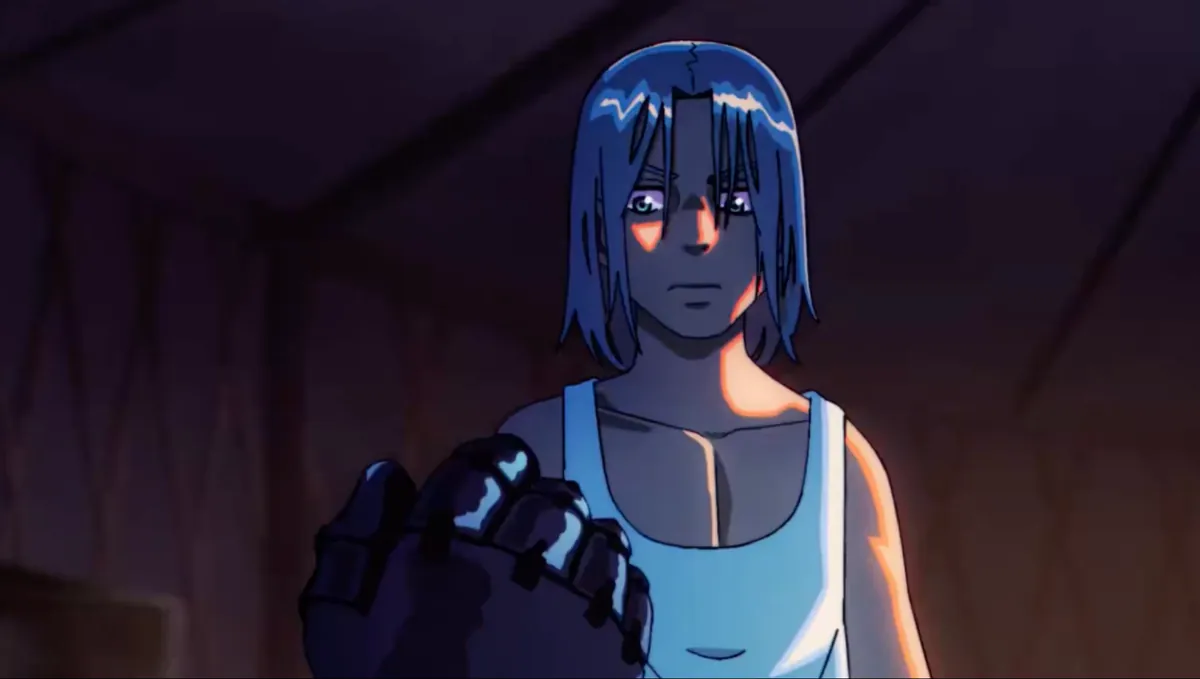
G2 appears to be the first major Western org to build a universe it actually owns, and that distinction matters enormously
Team Liquid has worked with Bleach. Sentinels has a Haikyu partnership. Both are legitimate brand moves — the overlap between anime audiences and esports audiences is well documented — but they are licensing arrangements. Someone else holds the rights; the org holds a collab credit. G2 has done something structurally different: commissioned an original shonen-inspired story described by the org as drawn from "the ambition, achievement, and emotional journeys" of its decade in competitive gaming. Whether that translates into compelling narrative is what the first 20 episodes will answer. What is not in question is the ownership structure. G2 holds the IP. Every merchandise line, every potential animation adaptation, every downstream licensing deal flows back to the org.
| Organisation | IP approach | Platform / format | Who owns the IP |
|---|---|---|---|
| G2 Esports | Original webcomic (Red Aura) | WEBTOON Originals | G2 Esports |
| Team Liquid | Licensed anime collab (Bleach) | Merchandise / content | Shueisha (licensed) |
| Sentinels | Licensed anime collab (Haikyu) | Merchandise / content | Shueisha (licensed) |
| Fnatic | Hardware, apparel, brand extensions | Retail / DTC | Own brand only — no narrative IP |
| Team Vitality | No original IP announced | — | — |
The honest counter-argument is that WEBTOON converts existing fans, not strangers — and that is a meaningfully smaller prize
I do not want to oversell this. WEBTOON's Originals label generates real reach, but the platform's genuine breakout successes — Lore Olympus, Tower of God, True Beauty — built their audiences from within the comics community, not from adjacent brand fanbases. An esports-branded webcomic is, by default, marketed at people who already know what G2 is. That is not worthless: fan depth matters for merchandise conversion and it insulates the brand from the volatility of a single roster era. But it is not the same as reaching someone who has never watched a CS2 stream and finds themselves buying a G2 hoodie because a webcomic hooked them.
- The ownership argument. G2 holds the IP outright — if Red Aura scales, every downstream deal (merchandise, animation rights, sequel commissions) flows directly to the org rather than a third-party licensor in Tokyo.
- The title-cycle argument. Competitive rosters are bound to game titles that rise and decline; an original narrative universe is not. G2 has already navigated several such cycles — this is the logical infrastructure response.
- The conversion ceiling. WEBTOON's core audience are comics readers; esports-branded originals have not yet demonstrated they can meaningfully cross into that community rather than simply recirculating existing fans at greater depth.
- The production credibility question. KISAI Entertainment's track record lends legitimacy, but esports orgs have greenlit content projects before that quietly wound down after one season when the platform engagement data came in.
British orgs are almost entirely absent from this conversation, and the gap reflects something more structural than ambition
Here is the UK angle, and it is not comfortable. Fnatic — London-founded, one of the most globally recognisable brands in esports — has not pursued original IP at this scale. Team Vitality has a UK operational presence but is structurally a French organisation. As I wrote in our assessment of UK esports in 2026, the British scene is characterised by genuine grassroots depth and chronic institutional undercapitalisation. Taking a genuine creative risk — commissioning a 42-episode webcomic with a production studio and a professional art director — requires both strategic appetite and a balance sheet that can absorb a multi-year project before it converts.
Fnatic's ongoing ownership situation, with football organisations reportedly circling, suggests its strategic energy is pointed firmly inward at present. A buyout conversation and an original IP commission are not compatible priorities. But if Fnatic stabilises under new ownership with proper capitalisation, this is precisely the kind of move a properly resourced version of the org should be making. The brand recognition is there. The global audience is there. What has been missing is a backer willing to fund something with a two-year payoff horizon.

The next thing to watch is whether Red Aura gets a second season — that outcome will tell us everything about whether this is strategy or spectacle
The next thing to watch is not the launch weekend. WEBTOON launches are relatively straightforward to engineer: seed 20 episodes on day one, let the platform algorithm work for a fortnight, post the chart position on social. The real test arrives roughly six months from now, when G2 either commissions a second season on the strength of the readership data or the series quietly transitions to a hiatus notice. That decision — not the launch headlines, not the opening-weekend chart position — will tell us whether WEBTOON represents a genuine long-term channel for esports IP or an unusually elaborate press release timed to Global Esports Industry Week. G2 has the resources to sustain a multi-year project if the numbers justify it. Whether those numbers materialise outside the existing G2 community is the only question worth tracking. I would set a reminder for January 2027.


